
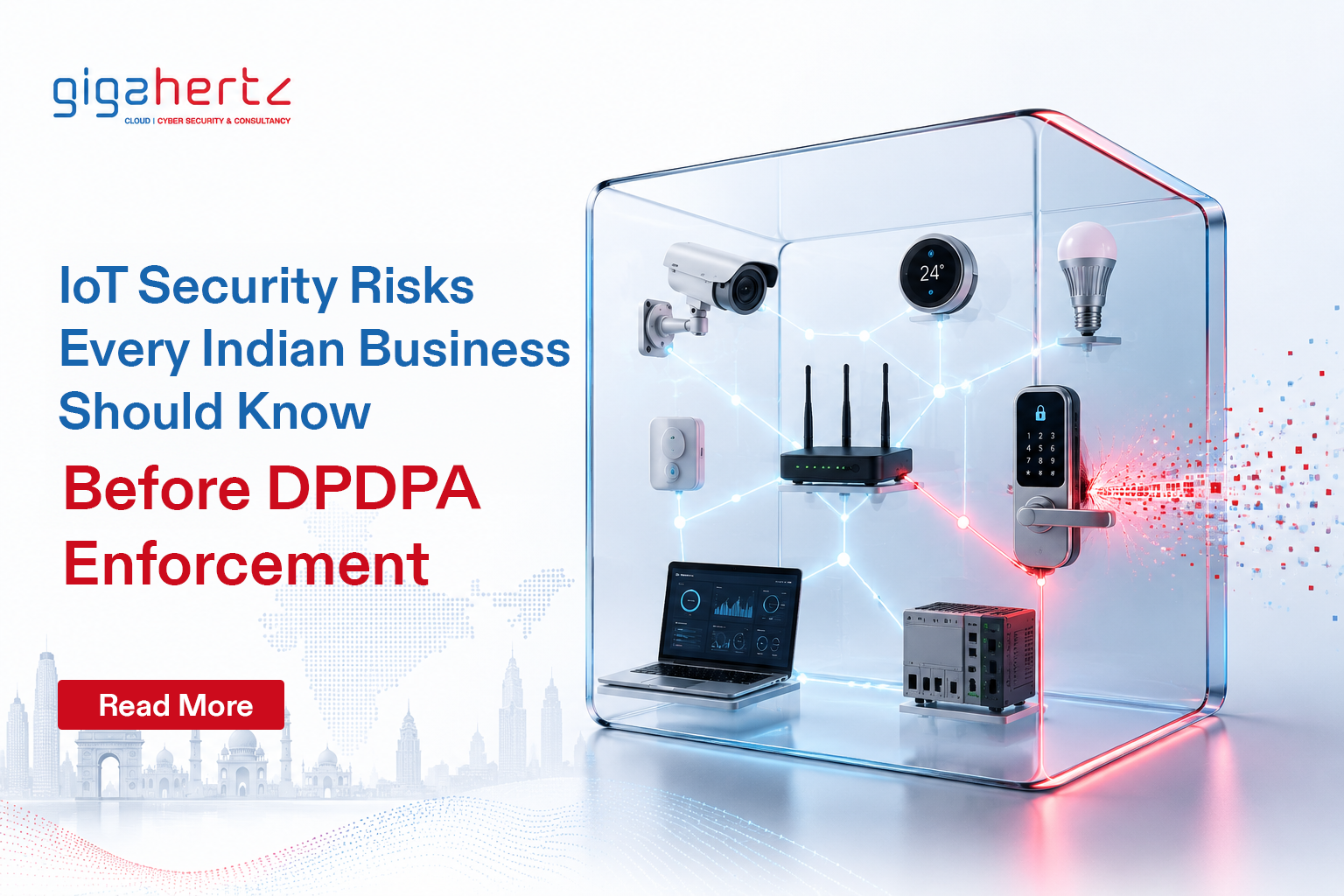
IoT Security Risks Every Indian Business Should Know Before DPDPA Enforcement
The rapid adoption of Internet of Things (IoT) devices across India is transforming industries, from manufacturing and healthcare to logistics and retail. However, with this digital transformation comes a rising wave of cybersecurity concerns. As India prepares for stricter enforcement of the Digital Personal Data Protection Act (DPDPA), businesses must take a closer look at IoT security risks for Indian businesses and their implications.
IoT ecosystems generate massive volumes of data, often including sensitive personal and operational information. Without robust security measures, organizations risk breaches, legal penalties, and reputational damage. This blog explores the most critical IoT cybersecurity risks, highlights IoT privacy risks in India, and provides actionable strategies to achieve DPDPA compliance for IoT systems.
Understanding IoT Security Risks for Indian Businesses
IoT devices include sensors, smart meters, surveillance systems, industrial machinery, and connected consumer devices. These devices communicate over networks, often with minimal built-in security.
Key Characteristics That Increase Risk:
- Limited processing power (restricts security implementation)
- Default or weak authentication
- Lack of regular firmware updates
- High device volume creating larger attack surfaces
As a result, businesses face a wide spectrum of IoT data security threats.
Major IoT Cybersecurity Risks in India
1. Unauthorized Device Access
Many IoT devices operate with default credentials or weak passwords. Hackers can exploit these vulnerabilities to gain unauthorized access.
Impact:
- Data theft
- System manipulation
- Unauthorized surveillance
2. Data Breaches and Leakage
IoT devices continuously collect and transmit data. Without encryption or secure storage, this data becomes highly vulnerable.
IoT Data Security Threats Include:
- Intercepted communication
- Cloud misconfigurations
- Unsecured APIs
For Indian businesses handling personal data, such breaches can directly violate DPDPA regulations.
3. Botnet Attacks (e.g., DDoS)
Compromised IoT devices are often used in botnet attacks to overwhelm servers.
Example Risks:
- Service downtime
- Financial loss
- Damage to brand reputation
4. Lack of Standardized Security Protocols
India’s IoT ecosystem lacks uniform security frameworks across industries, increasing IoT security challenges.
Challenges Include:
- Vendor inconsistencies
- Poor device lifecycle management
- Inadequate security testing
5. Insider Threats and Misconfigurations
Employees or contractors may unintentionally expose systems due to lack of awareness or improper configurations.
6. Firmware Vulnerabilities
Outdated firmware can contain exploitable vulnerabilities that attackers use to infiltrate networks.
IoT Privacy Risks in India
With the DPDPA emphasizing personal data protection, IoT devices pose unique privacy concerns.
Key Privacy Risks:
- Collection of sensitive personal data without consent
- Continuous monitoring (e.g., CCTV, wearable devices)
- Data sharing with third-party vendors
Businesses must ensure transparency in data usage and obtain explicit consent where required.
Digital Personal Data Protection Act (DPDPA) and IoT
The Digital Personal Data Protection Act IoT implications are significant. The law mandates:
Core Requirements:
- Consent-based data collection
- Purpose limitation
- Data minimization
- Secure data storage and processing
- Breach notification protocols
Penalties for Non-Compliance:
- Heavy financial penalties
- Legal consequences
- Loss of customer trust
DPDPA Compliance for IoT Systems
To align with DPDPA, Indian businesses must adopt a proactive approach.
1. Data Mapping and Classification
Identify:
- What data is collected
- Where it is stored
- Who has access
2. Implement Strong Authentication
- Multi-factor authentication (MFA)
- Unique device credentials
3. Encrypt Data End-to-End
Ensure encryption:
- At rest
- In transit
4. Regular Security Updates
- Patch vulnerabilities
- Maintain firmware updates
5. Secure APIs and Networks
- Use firewalls
- Monitor traffic
- Restrict unauthorized access
6. Conduct Risk Assessments
Periodic audits help identify and mitigate IoT security risks early.
IoT Security Challenges in the Indian Market
1. Rapid Adoption Without Security Planning
Businesses often prioritize deployment speed over security.
2. Cost Constraints
SMEs may avoid investing in advanced cybersecurity solutions.
3. Lack of Skilled Professionals
There is a growing demand for IoT security experts in India.
4. Complex Device Ecosystems
Managing multiple vendors and devices increases vulnerability.
Best Practices to Mitigate IoT Cybersecurity Risks
Adopt a Zero-Trust Architecture
Never assume any device or user is trustworthy by default.
Network Segmentation
Separate IoT devices from critical business systems.
Continuous Monitoring
Use AI-powered tools to detect anomalies in real-time.
Vendor Risk Management
Evaluate vendors based on their security standards.
Employee Training
Educate staff about:
- Phishing attacks
- Secure device usage
- Data privacy practices
Industry-Specific IoT Risks in India
Manufacturing
- Industrial espionage
- Production disruption
Healthcare
- Patient data breaches
- Device tampering
Retail
- Customer data theft
- Payment fraud
Logistics
- GPS spoofing
- Shipment tracking manipulation
What are IoT security risks for Indian businesses?
IoT security risks for Indian businesses include unauthorized access, data breaches, botnet attacks, and privacy violations due to weak device security and lack of proper cybersecurity measures.
How does DPDPA impact IoT security?
DPDPA requires businesses to secure personal data collected through IoT devices, enforce consent mechanisms, and implement strong data protection measures.
Why are IoT devices vulnerable?
IoT devices are vulnerable due to weak authentication, lack of updates, limited processing power, and inconsistent security standards.
IoT adoption is rapidly increasing in major Indian cities like Bangalore, Mumbai, Delhi, and Hyderabad. Businesses operating in these regions must prioritize IoT security to comply with Indian data protection laws and maintain competitive advantage.
Future of IoT Security in India
With the enforcement of DPDPA, IoT security will become a legal necessity rather than a technical option. Businesses that invest early in cybersecurity frameworks will gain:
- Customer trust
- Regulatory compliance
- Competitive advantage
Final Thoughts
IoT is revolutionizing Indian businesses, but it also introduces complex cybersecurity challenges. Understanding and mitigating IoT security risks for Indian businesses is crucial in the era of data protection regulations.
Organizations must act now, before DPDPA enforcement, to strengthen their IoT ecosystems, safeguard sensitive data, and ensure compliance.
For businesses looking to secure their IoT infrastructure, Gigahertz Consultants offers specialized solutions tailored to modern cybersecurity needs. Their expertise in IoT security services helps organizations identify vulnerabilities, implement robust defenses, and stay compliant with evolving regulations. Explore their services to build a secure, future-ready IoT ecosystem.
FAQs
1. What are the biggest IoT security risks for Indian businesses?
The biggest risks include data breaches, unauthorized access, botnet attacks, and lack of encryption.
2. Is IoT covered under DPDPA?
Yes, any IoT device that collects personal data falls under DPDPA regulations.
3. How can businesses improve IoT security?
By implementing encryption, strong authentication, regular updates, and continuous monitoring.
4. What industries are most affected by IoT risks in India?
Manufacturing, healthcare, retail, and logistics are highly impacted.
5. Why is IoT security important before DPDPA enforcement?
To avoid penalties, protect user data, and maintain business credibility.
6. What is the role of encryption in IoT security?
Encryption protects data from unauthorized access during transmission and storage.
Category: SCADA